What Is Drone Shark Surveillance?
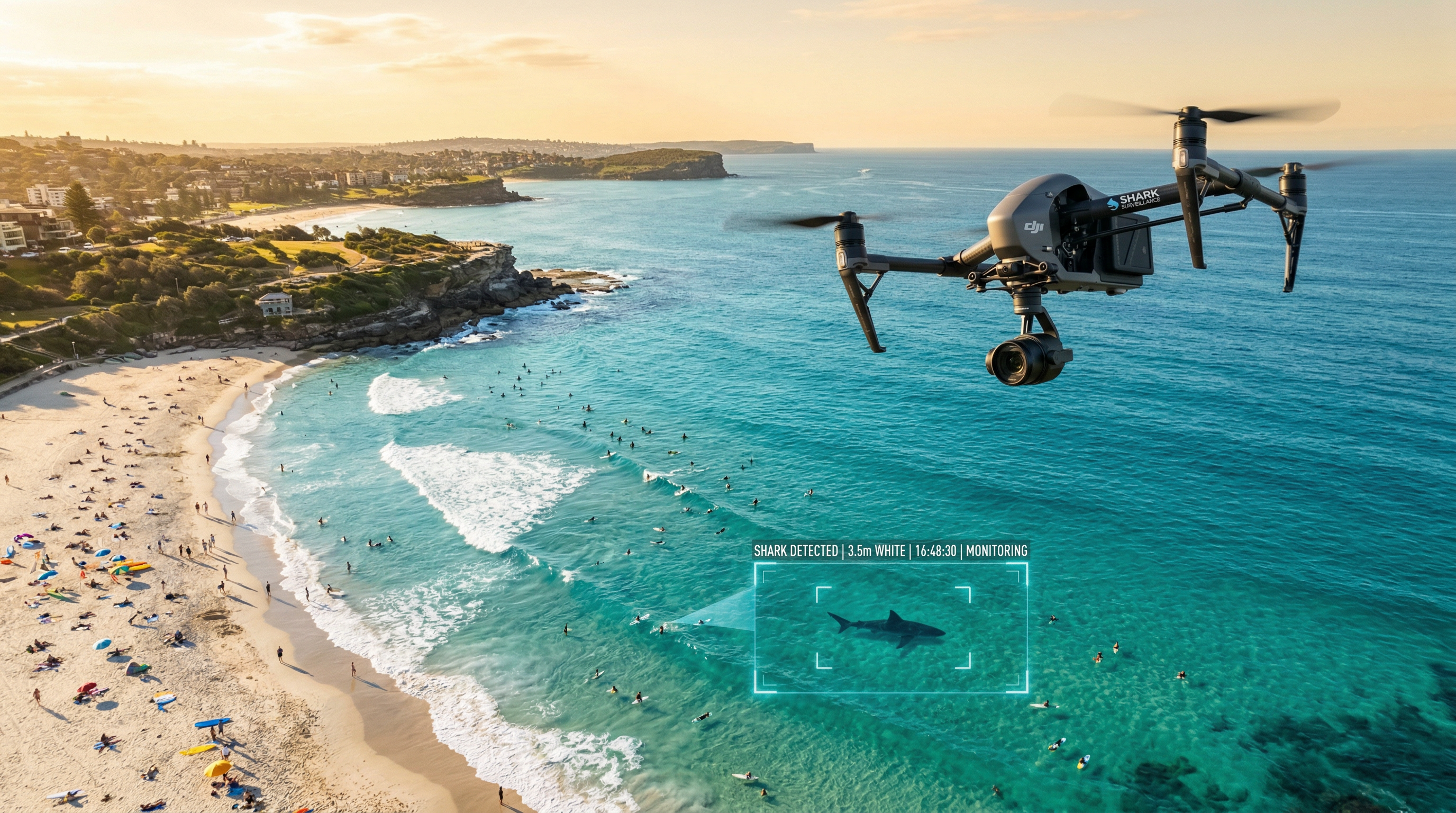
Drone shark surveillance is the deployment of unmanned aerial vehicles (UAVs) over coastal waters to detect, monitor, and report on shark activity in real time. CWSA uses a purpose-fitted thermal imaging drone alongside standard high-resolution visual cameras to give beach managers and water users the most accurate picture of what's happening beneath the surface.
Unlike traditional aerial surveillance from manned aircraft, drone-based operations can be deployed rapidly, operate at low altitude for maximum detection accuracy, and relay live footage directly to a ground station — enabling real-time decision-making by beach safety staff, lifeguards, or council officers.
Our Equipment & Capability
CWSA operates a professional-grade thermal drone configured specifically for marine surveillance. The thermal sensor detects the heat signature of marine life just below the surface — a capability that significantly outperforms standard RGB cameras in varying light conditions, early morning hours, and glare-heavy environments common on Australian beaches.
- Thermal (FLIR-compatible) imaging for sub-surface heat detection
- High-resolution 4K visual camera for confirmation and documentation
- Extended flight duration suitable for sustained patrol operations
- Live video downlink to a dedicated ground control station
- Marine VHF radio integration for real-time communication with water safety personnel
- Rapid deployment — airborne within minutes of arrival on site
How It Works
A CWSA drone pilot — certified under CASA (Civil Aviation Safety Authority) — operates the UAV in a systematic patrol pattern over designated swimming and surfing areas. The aircraft flies at an optimised altitude that balances field of view with detection resolution, typically between 20 and 60 metres above sea level.
When a potential shark is detected, the pilot classifies the sighting using established marine identification protocols. Confirmed or probable shark sightings are communicated immediately via VHF radio to on-beach safety personnel, who follow pre-agreed beach closure and alert procedures. All footage is recorded and can be provided to beach managers or council partners as part of post-session reporting.
CWSA can operate in both planned surveillance windows — such as early morning sweeps before a beach opens — and as reactive deployments following a reported sighting or shark alert.
AI-Assisted Detection
CWSA is actively integrating AI-assisted detection into its drone surveillance workflow. Machine learning models trained on shark and marine life datasets allow the system to flag areas of interest in real time, reducing detection latency and supporting the pilot in high-pressure, fast-moving situations. This positions CWSA at the forefront of technology-led beach safety in Australia.
What Councils & Organisations Receive
When you partner with CWSA for drone shark surveillance, you receive a complete, professionally managed service — not just a drone in the sky. Our deliverables include:
- Pre-deployment consultation and site risk assessment
- CASA-compliant airspace and operational approvals
- Briefing with beach safety staff and relevant stakeholders
- On-site operations with real-time VHF communication
- Post-session written report including sighting data, flight logs, and any incidents
- Video footage archive for review, training, or media purposes
- Recommendations for ongoing surveillance scheduling
Whether you're a local council managing a patrolled beach, an event organiser running an ocean swim, or a surf club seeking seasonal surveillance cover, CWSA can structure a programme that fits your operational and budgetary requirements.
Live video downlink and VHF radio integration means sightings are communicated to beach safety personnel within seconds — not minutes.
Dual-sensor operations combining thermal imaging with 4K visual capture — effective in low light, glare, and turbid water conditions.
All CWSA drone operations are conducted by CASA-certified Remote Pilot Licence (RePL) holders in full compliance with Australian aviation regulations.
Post-session reports including sighting logs, flight records, and annotated video footage — giving councils and organisations an evidence base for safety decisions.